
Dell AI Storage – storage that keeps your GPUs busy
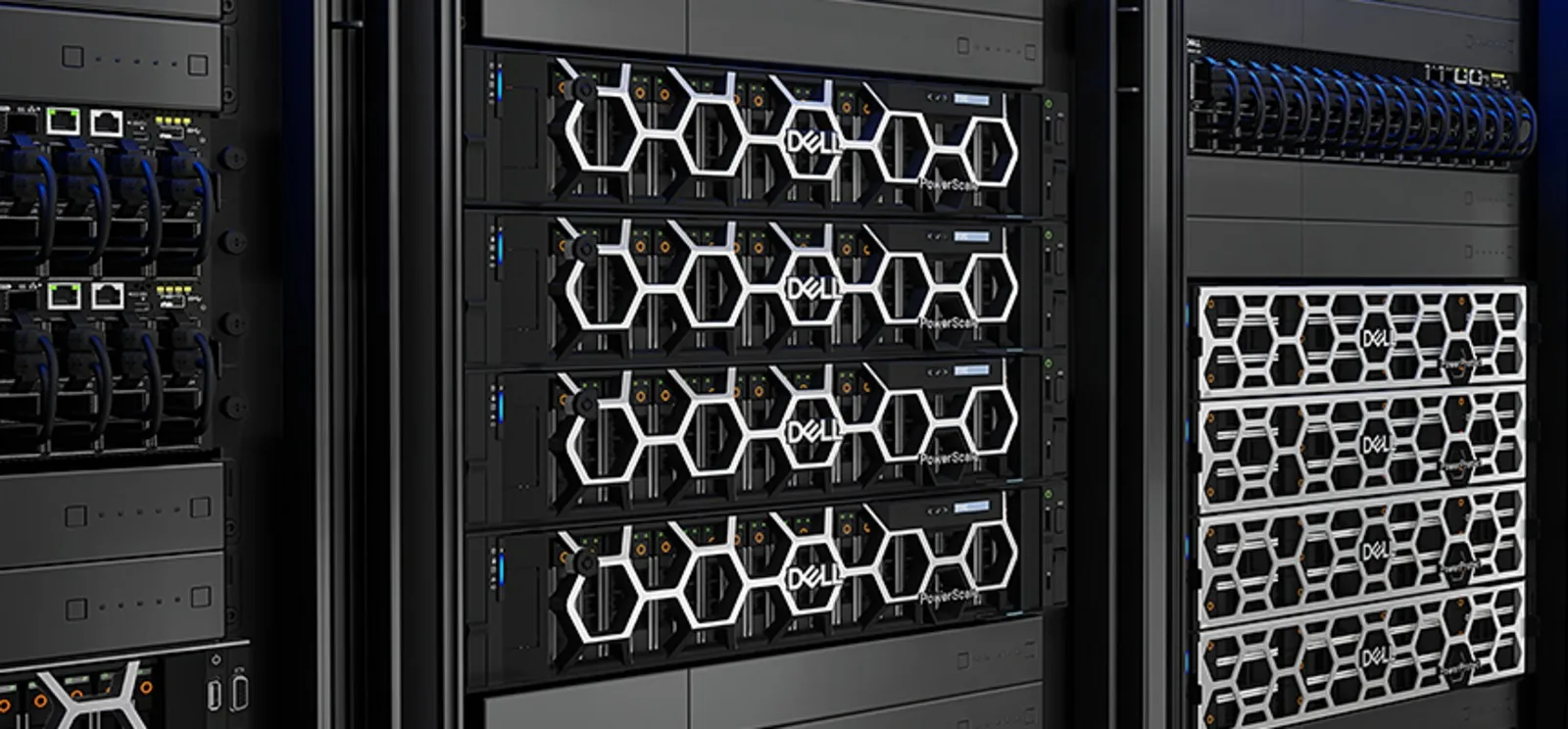
PowerScale scale-out NAS for training, RAG and inference: parallel data access, all-flash and archive tiers in one cluster, validated with NVIDIA DGX. Delivery, integration and commissioning in Serbia.
-
 Validated for NVIDIA DGX BasePOD and SuperPOD
-
All-flash and archive in one cluster and namespace
-
3 up to 252 nodes – from terabytes to hundreds of petabytes
What Dell AI Storage is
Data is what keeps GPUs productive
A GPU cluster is only as fast as the data reaching it. Training, RAG and inference carry enormous collections of files, objects and metadata that hundreds of processes need at once – and that is where a regular NAS breaks first.
Dell AI Storage is that part of the solution: PowerScale scale-out NAS joins the nodes into a single volume with one namespace and serves data in parallel to every node and GPU, while an archive tier in the same cluster keeps older data available and under control.
The offer follows the manufacturer’s current line: the cost-effective F210, the workhorse F710 and the largest F910 all-flash nodes, plus the A310 archive platform – with ObjectScale S3 object storage available on request.
We deliver storage as part of the whole AI project: network (Dell AI switches), GPU systems and storage go into one specification – with installation, OneFS setup, a throughput test and a documented handover.
Why Dell AI Storage
Storage sized for AI traffic
Four reasons PowerScale ends up next to GPU clusters instead of a generic NAS.
Parallel data access
Training and inference read huge datasets from hundreds of GPUs at the same time. PowerScale serves data in parallel to every cluster node – the GPUs never wait on storage.
One cluster, multiple tiers
All-flash for active data and an archive tier in the same cluster, with a single namespace and a single protection policy. Data grows from terabytes to petabytes without migration.
Validated with NVIDIA DGX
PowerScale is validated for the NVIDIA DGX BasePOD and SuperPOD references – network, hardware and storage are designed along proven schemes, not guesswork.
One volume, one management plane
OneFS combines the nodes into a single volume with deduplication, snapshots and encryption – your IT team runs one system, not dozens of file servers.
Models
PowerScale platforms on offer
From a cost-effective entry into all-flash to a 2U platform with 24 NVMe drives and an archive tier – every card is a “Request a quote” inquiry, with no prices. The manufacturer’s current range changes – the concrete model and configuration are confirmed in the specification.
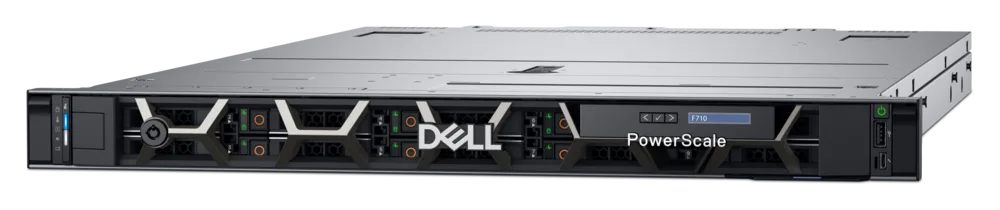
Dell PowerScale F710
- 1U all-flash NAS – 10× 2.5-inch NVMe SSD (TLC, QLC)
- Raw capacity 38 TB – 1.2 PB per node
- Cluster: 3 up to 252 nodes – up to 307 PB
- 2× Intel Xeon (2.6 GHz/24C), 512 GB DDR5
- The workhorse platform for training and inference pipelines
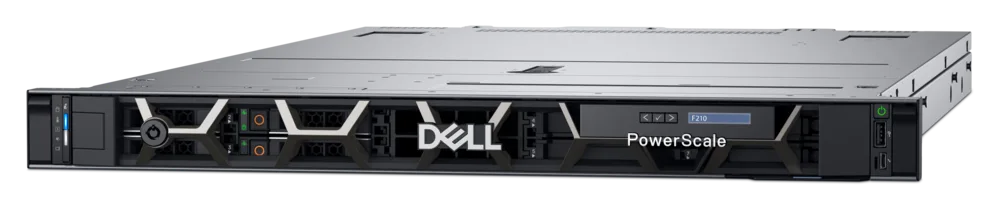
Dell PowerScale F210
- 1U all-flash NAS – 4× 2.5-inch NVMe SSD (TLC, QLC)
- QLC drives – a cost-effective entry into all-flash
- Raw capacity 7.7 – 61 TB per node
- Cluster: 3 up to 252 nodes – up to 15 PB
- 2× Intel Xeon (2 GHz/10C), 128 GB DDR5
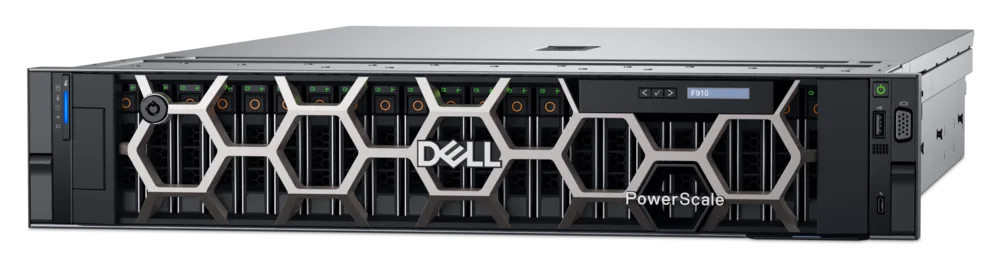
Dell PowerScale F910
- 2U all-flash NAS – 24× 2.5-inch NVMe SSD (TLC, QLC)
- Raw capacity 92 TB – 2.9 PB per node
- Cluster: 3 up to 252 nodes – up to 737 PB
- 2× Intel Xeon (2.6 GHz/24C), 512 GB DDR5
- For the largest GPU clusters and highest-throughput data
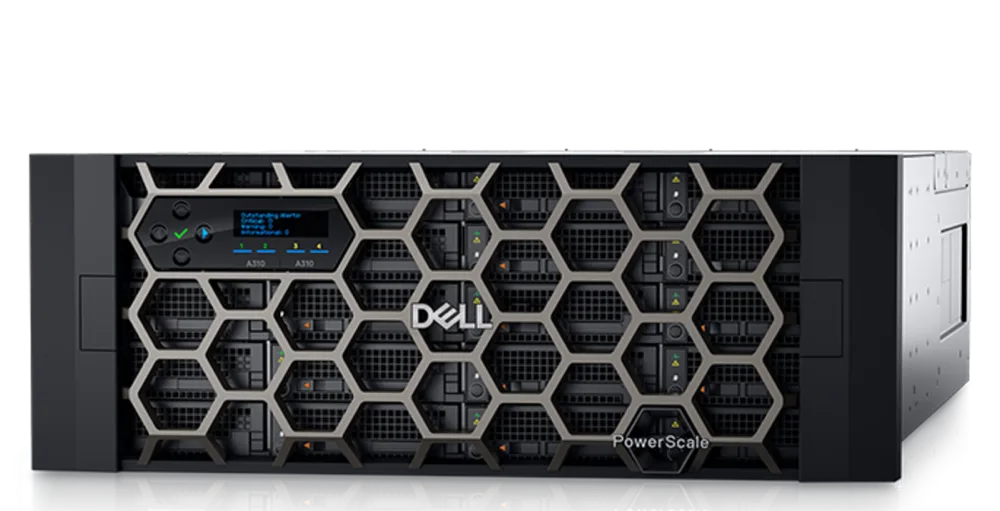
Dell PowerScale A310
- 4U archive platform – 4 self-contained nodes per chassis
- 15× 3.5-inch drives (SATA/SAS) per node
- Chassis capacity 120 TB – 1.4 PB (raw)
- Cluster up to 75 PB – active archive and long-term retention
- 1× Intel Xeon 3408U, 96 GB of memory
FAQ
Frequently asked questions
Request a storage specification
Describe what the storage should carry (training datasets, a RAG corpus, an archive) and the amount of data you estimate – we propose the platform, the number of nodes and tiers, with a raw-to-usable capacity calculation.


AI infrastructure
More from the AI range
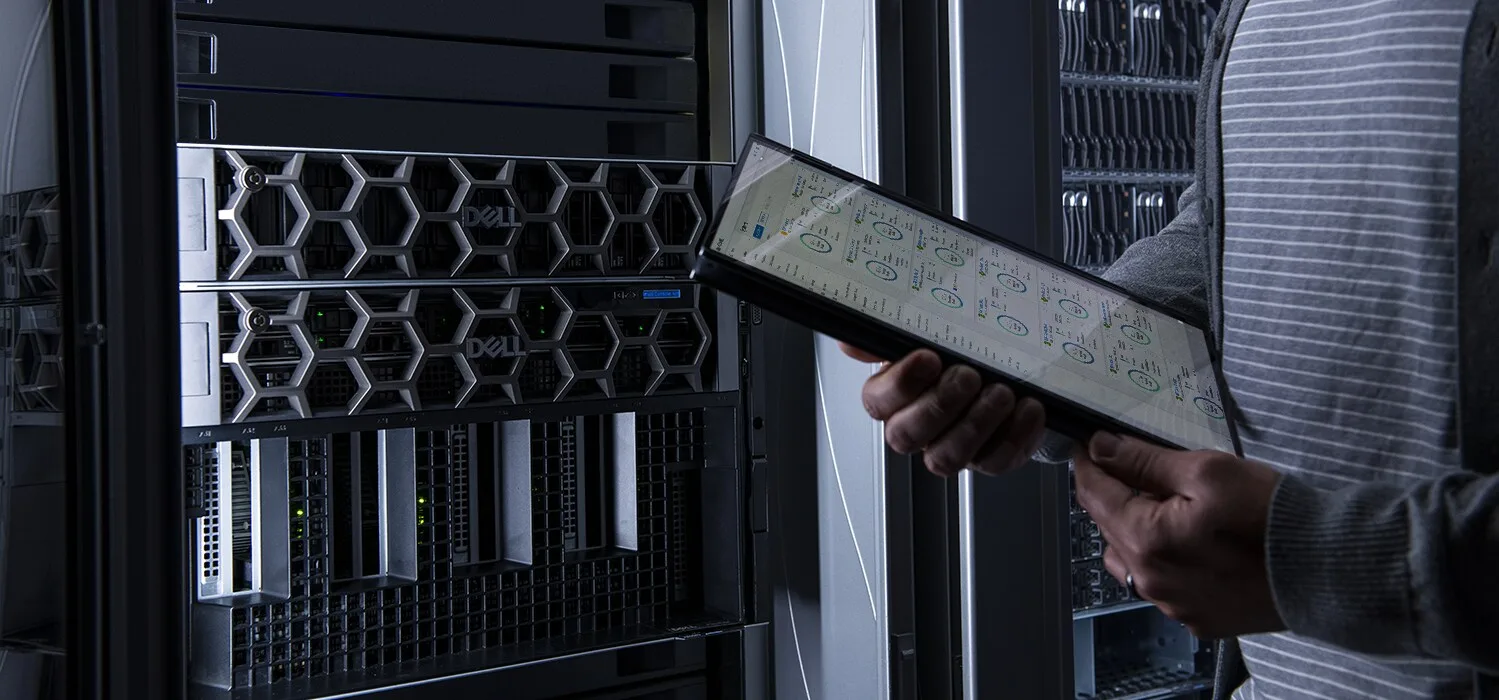
Dell AI Servers
PowerEdge XE servers with up to 8 NVIDIA or AMD accelerators – air and liquid cooling, rack integration and commissioning.
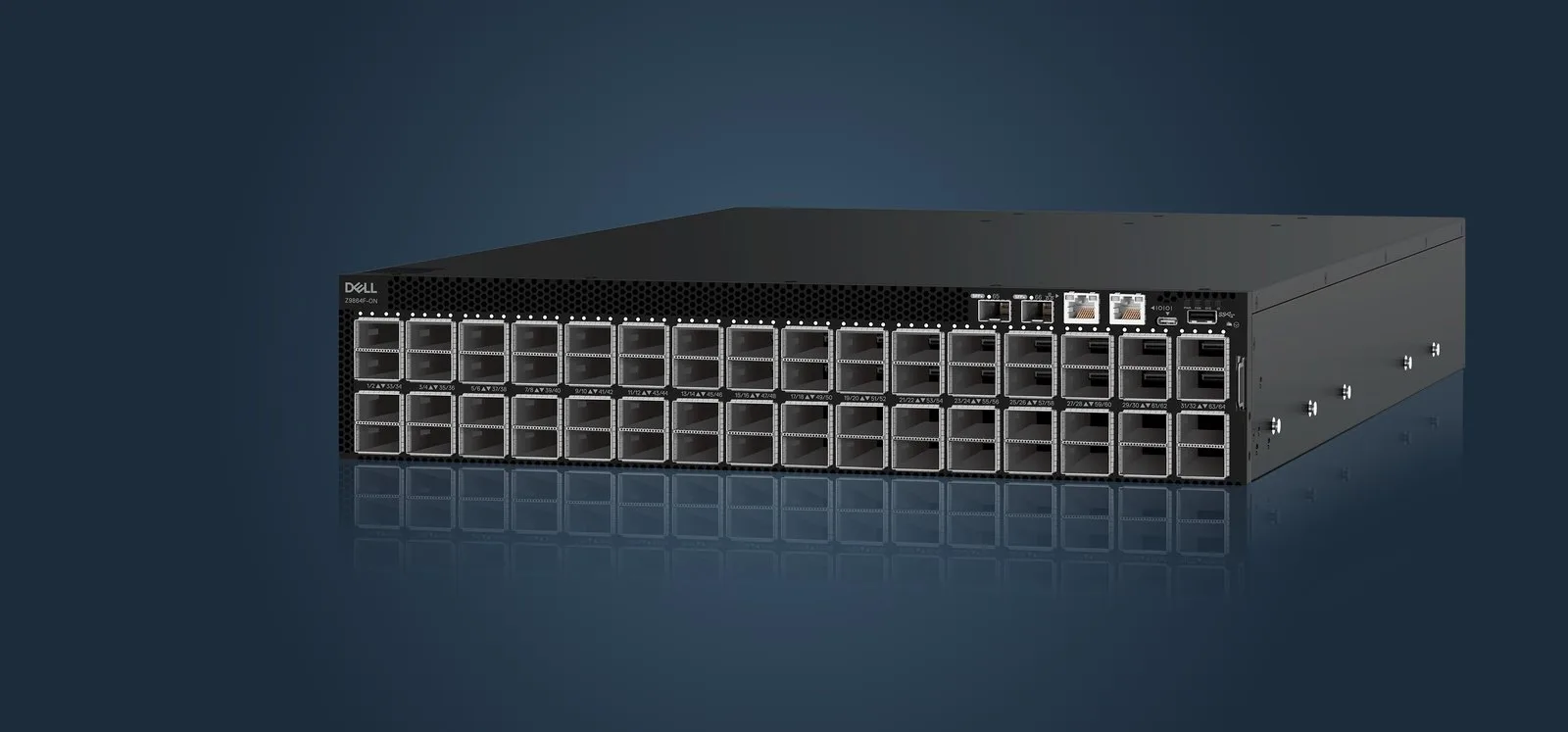
Dell AI Switches
Dell PowerSwitch and NVIDIA switches for GPU clusters: 400G and 800G Ethernet, InfiniBand and Enterprise SONiC.
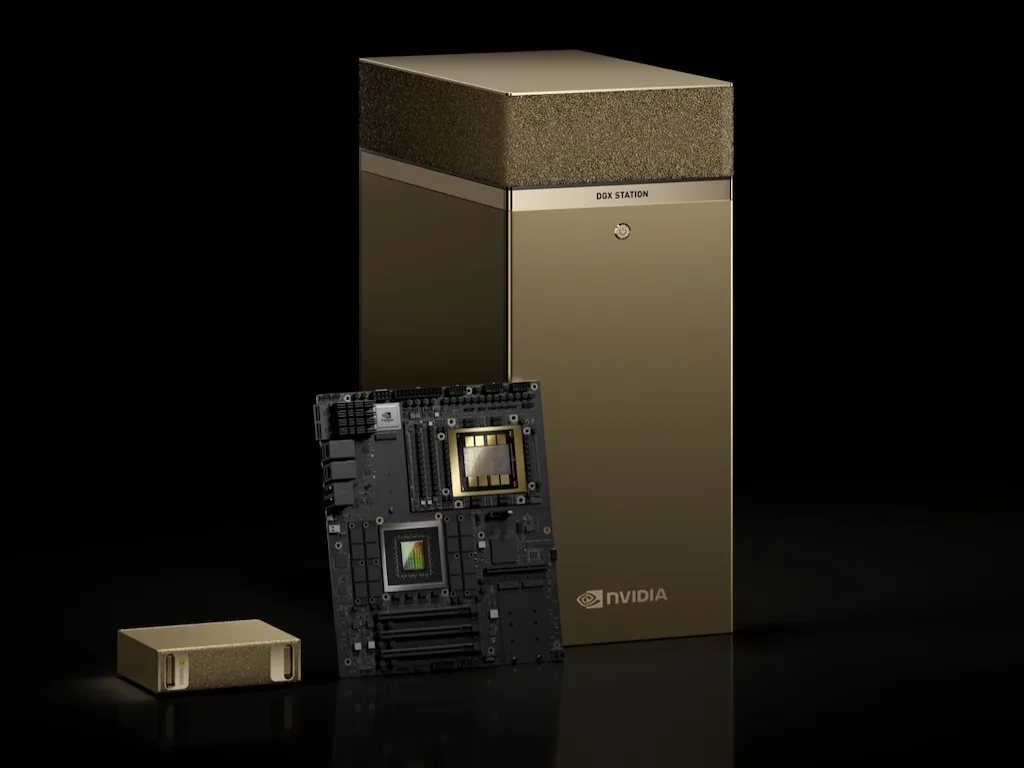
NVIDIA DGX Station
A deskside AI supercomputer for the team: GB300 Grace Blackwell Ultra, up to 748 GB of coherent memory.
Servers & storage
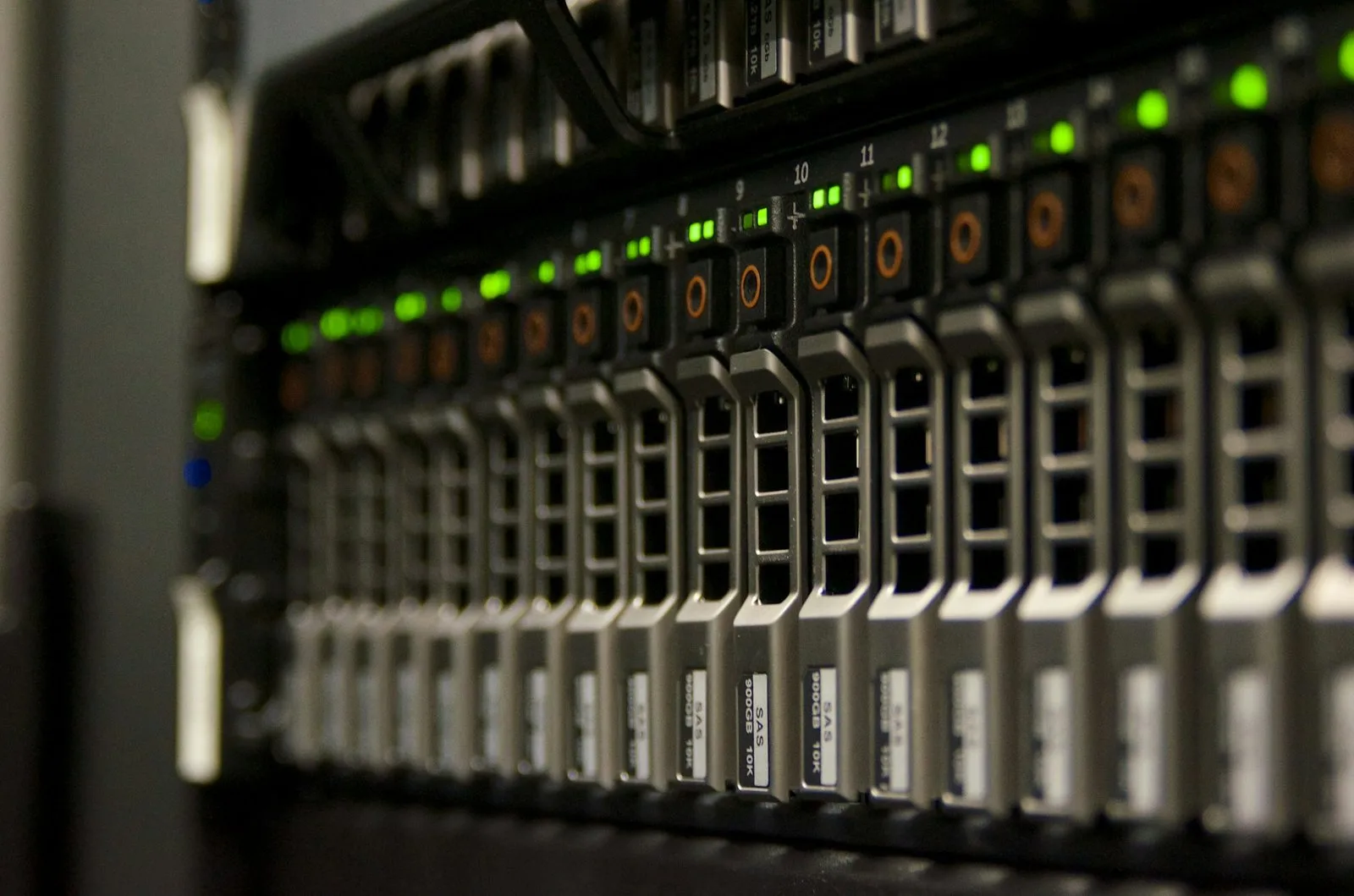
Standard rack servers, all-flash and hybrid storage from Dell, HPE, Lenovo and Supermicro – for virtualization and business applications.